
The Month Two Filter
The skill doesn't come from the course. It comes from the work. ##

You’re not behind on knowledge. You’re behind on taking action.
Pick any skill you’ve been working on for the last three months, writing, fat loss, photography, coding, running, a creative project, a new discipline. Ask yourself honestly: how much have you actually built? How many real things have you tested? How often has what you’re doing been put in front of real conditions?
If the answer is close to nothing, the problem isn’t what you’re learning. It’s that you haven’t started the building phase yet.
I know this because I proved it in the most literal way possible.
Six months before my first ultramarathon, I couldn’t run a 5K without stopping. I didn’t read a single book about training in those six months. Didn’t watch tutorials on running form. Didn’t take a course on race strategy.
I ran.
Four times a week. Building distance slowly. Making mistakes and running through them.
October 2022. First ultra. 50km. Finished 5th out of 82 entrants.
What happened between those two points wasn’t a reading list. It was a building phase.
And this is what I have watched happen across every domain of skill development: in business, in creative work, in sport, in parenting, in relationships. People skip the building phase entirely. They consume. They prepare to produce. They take courses about the thing instead of doing the thing. They spend Tuesday evenings watching tutorials and calling it progress.
Month two is where most of them disappear.
You Don’t Have a Knowledge Problem. You Have a Production Problem.
Whatever skill you want: writing, sales, coding, photography, design, coaching, negotiation. You could learn the foundational theory for £0 within the next three months. YouTube, Reddit, podcasts, free courses. The information exists. It’s cheap. It’s everywhere.
The problem is that consuming information feels productive. Your brain is receiving new inputs. It’s engaged. It’s filing things away with the warm satisfaction of apparent progress.
But you haven’t made anything.
The moment you put your work in front of real conditions, the feedback loop changes completely. A piece of writing published under your name. A training run timed against your actual current fitness, not the version of yourself you imagine. A language conversation attempted with a native speaker. A recipe cooked for real people. A business idea put in front of a real customer. You receive different information now. Not how to do this. Whether this is working.
That feedback is brutal.
It’s also the only feedback that matters.
Two hours a day of building real things will teach you more in a month than two hours a day of passive consumption in a year. The content isn’t worse. The difference is that failure on real work is live information that updates your model. The course tells you the theory. Reality tells you the truth.
I built Optimal Chef Services to £5 million in revenue over 10 years by doing recruitment work. Not by studying the theory of chef recruitment.
One creates capability. The other creates the illusion of it.
Month Two Is the Actual Filter
Month two. The initial excitement has worn off. The early wins feel like they should compound, and they don’t. Progress slows. The gap between your current ability and the standard you’re aiming for is never wider than at month two. By now you know enough to see exactly how much you don’t know.
Most people interpret that gap as evidence they’re not talented enough.
They’re wrong.
They’re not failing. They’re just at month two.
The people who push through month two almost always succeed. They’re more persistent, not more gifted. They stopped treating the gap as a verdict and started treating it as a data point. That shift is the real work of skill development: from “I can’t do this” to “this is where the process requires me to be right now.” Nothing else comes close.
The shape of the building phase is the same regardless of the skill. Pure focus. Two to four hours per day with a single purpose: make something that didn’t exist yesterday. Not twenty minutes squeezed around meetings. Not forty-five minutes with half your attention on the phone. Actual blocks of uninterrupted time where the only job is to produce.
Real projects, not practice exercises. The person who improves their writing through daily prompt challenges learns one thing. The person who publishes work under their name, who invites genuine feedback, who writes for a real audience: that person learns a completely different thing. The stakes change the learning.
And then test it against reality. Put it in front of real conditions. Real people. Honest feedback.
This is where most people flinch. Putting your work in front of real conditions feels like judgement. It is. That’s the point. Whether someone engages with what you’ve made, ignores it, beats you in a race, tells you the truth about your progress, or comes back for more — that response is the most useful signal in the process. Fear of that signal is what keeps capable people stuck at amateur level indefinitely.
Not rejection. Fear of the information that rejection carries.
Six to Twelve Months. Not Six to Twelve Weeks.
The timescale is wrong for most people.
When someone decides to learn a skill, they’re usually imagining that meaningful proficiency arrives in four to six weeks. Eight weeks if they’re being pessimistic. When it hasn’t arrived by week ten, they conclude they’re not cut out for it. They move on to the next skill. Start the clock again. Repeat the cycle.
Six to twelve months is the honest window. Two to four hours per day of real building. Not learning about the skill. Building with it.
The running was simple in that way. I had no delusion that I’d be running ultras after a month. The distance made the timeline obvious. Add kilometres slowly, stay consistent, and keep showing up when every instinct said stay home. Trust the process to take as long as it takes.
Most skill development doesn’t have the same external signal. There’s no number on a watch going up each week. So people invent their own timeline based on impatience rather than reality. They design their expectations around comfort, not compound interest.
The process in its cleanest form: pick the skill. Block two hours daily for six months. Build or practise in real conditions from week one. Put your work in front of honest feedback from week two. By month three you’ll know if it’s working. Adjust based on what reality tells you. Keep building.
And when month two arrives and the excitement has drained and the gap between where you are and where you want to be feels like a chasm, stay.
That discomfort is not a signal to stop. It’s a signal that the process is working exactly as it should.
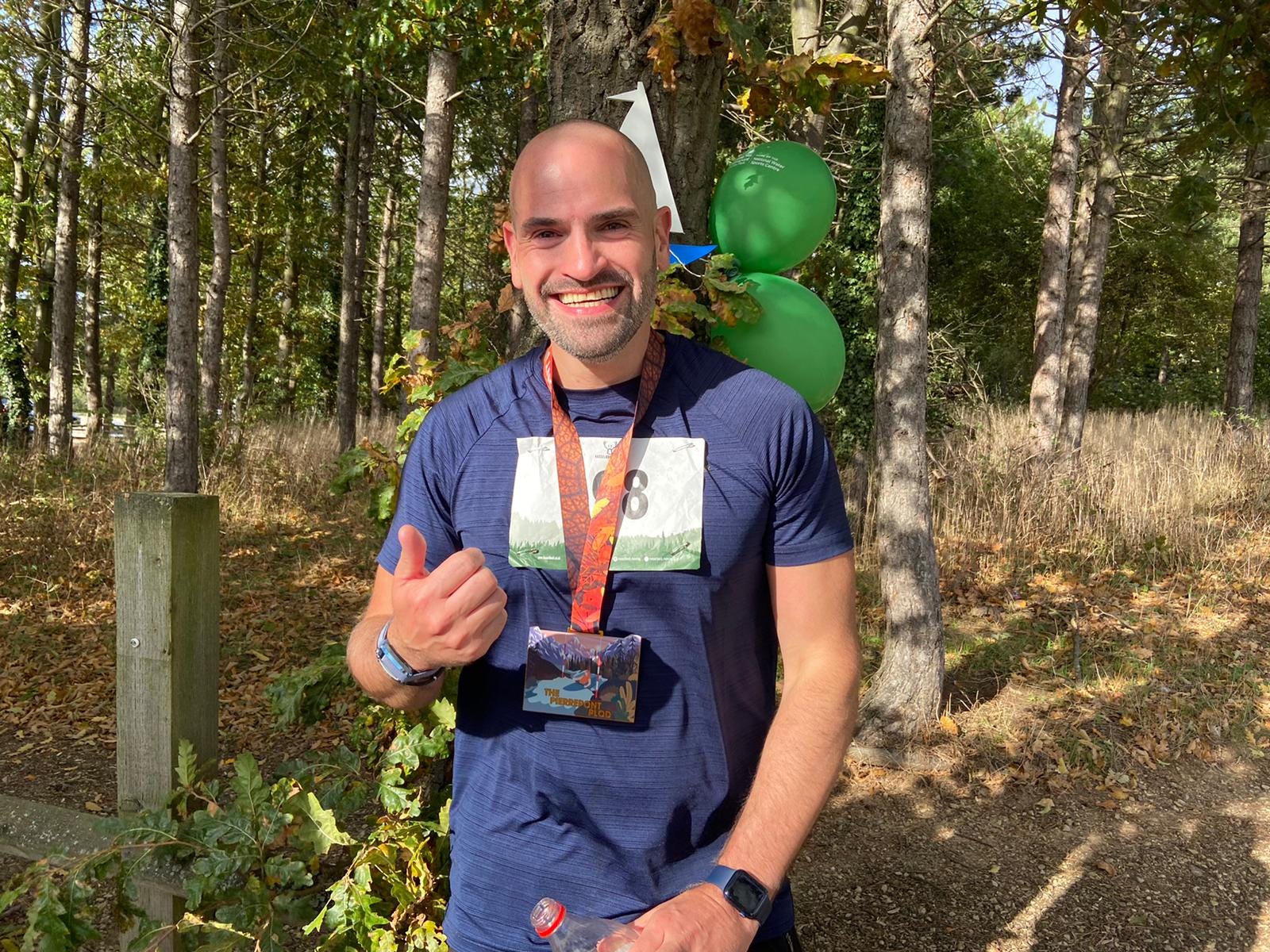
I came 5th out of 82 on my first ultramarathon. Talent had nothing to do with it. I ran. Four times a week, for six months, through bad sessions and good ones, through weeks where every run felt like a slog and sessions where I felt like I could go forever.
The skill doesn’t come from the course. It comes from the work.
Whatever you’re building: write it, run it, make it, photograph it, sell it, lift it, coach it. Six months of daily building beats any tutorial library ever assembled. Commit the time. Work every day. Put it in front of real conditions from week two. Treat every piece of feedback as data, not verdict.
Month two will try to convince you you’re failing.
You’re not.
You’re exactly where the process requires you to be.
To your growth.
- Chris
PS: This week: pick one skill you’ve been “learning about” for more than three months without building anything real. Block two hours tomorrow. Take action, however rough, however imperfect. Do it. Notice what that feedback tells you that no course ever could.
Thank you, Chris! This was very helpful 😊
Hi Chris, you are spot on in terms of how learning gets embedded through application, repetition, learning from real world feedbacks, recognizing errors, adjusting, re-doing, re-evaluating, then advancing to a new level...and looking to improve impact yet again.
What advice do you have for those of us who have been forced out of our corporate careers...investing many hours in learning new skills but lacking a problem-rich context, a challenge, access to data and systems to point our newly acquired skills at to embed our learning and receive real-time feedback? I have acquired so many new AI skills, but applying them to the context of my simple life and reality. is hardly the executive stretch I require to test and grow.
How can we work on real challenges?