
The Second Arrow Will Kill You
The first arrow hurts. The second is a choice.


Most people think pain is the problem.
It’s not.
Pain is information. Pain is your nervous system doing exactly what it is supposed to do. Pain is a signal that something needs your attention.
Suffering? That’s an entirely different animal.
Suffering is what happens when your brain decides the pain shouldn’t exist. Suffering is the story you construct around what happened. Suffering is what transforms a temporary setback into a permanent identity.
The pain you’re running from isn’t the physical sensation. It’s the meaning you’ve assigned to it.
Your brain is protecting you by destroying you
Watch what happens when something goes wrong.
You miss a deadline. Your mind immediately offers a story: “You’re disorganised. You can’t manage your time. You’re not cut out for this.”
The missed deadline is a fact. The story is optional.
You fail at something that mattered. Your mind offers a story: “You’re not good enough. You should have known better. This proves you don’t belong.”
The failure is a fact. The story is optional.
You face a difficult conversation. Your mind offers a story: “This will make things worse. They won’t understand. Better to avoid it.”
The difficulty is a fact. The story is optional.
You end up spending more energy fighting the narrative than dealing with the actual problem. You become paralysed by the story instead of focused on the solution.
Most people think they’re stuck because of what happened. They’re stuck because of what they’re telling themselves about what happened.
Your mind isn’t trying to hurt you. It’s trying to protect you. But protection through avoidance is just slow-motion destruction dressed up as safety.
There’s a Buddhist parable that nails this
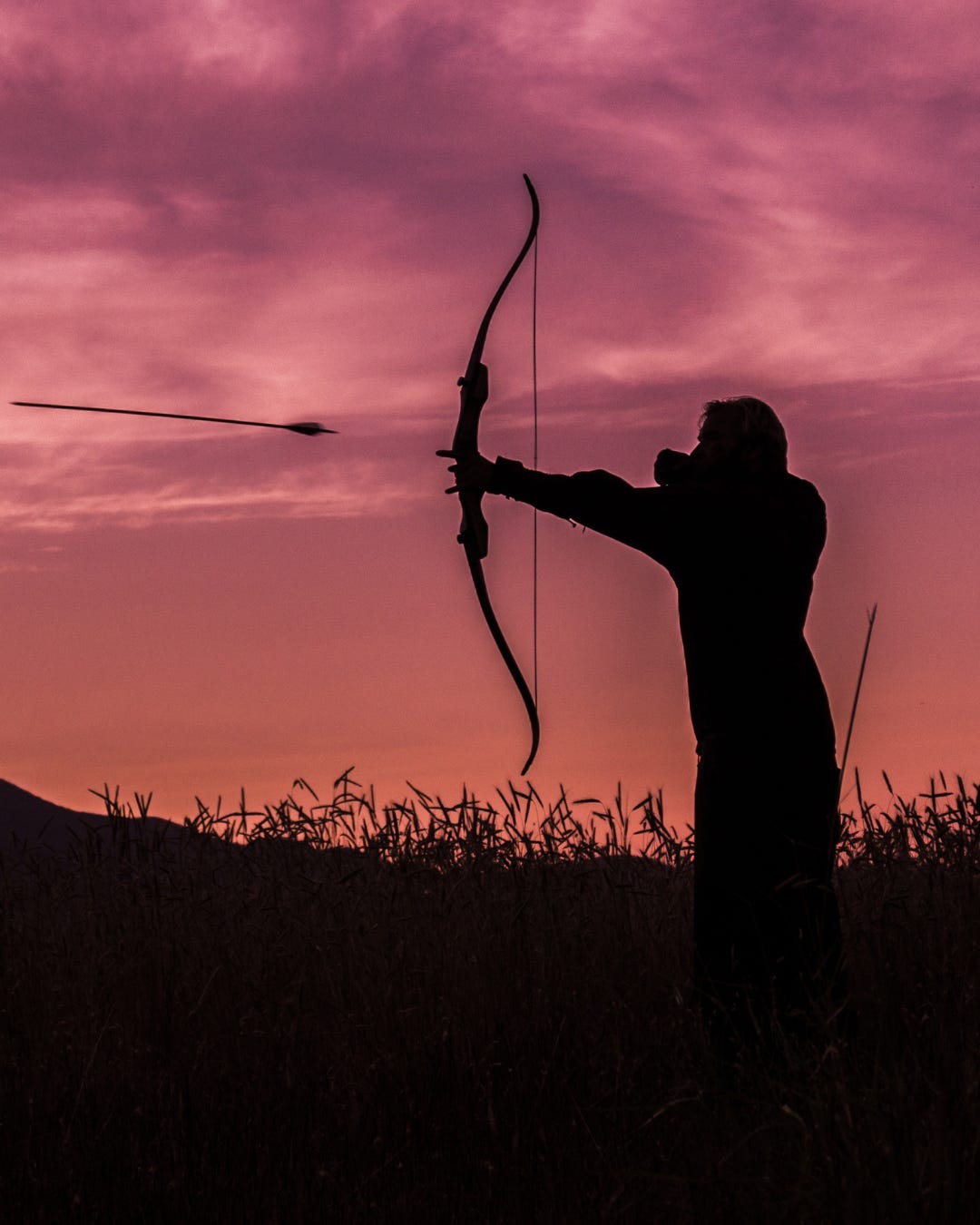
Imagine you’re walking on a mountain path. An archer’s arrow hits you out of nowhere. It pierces your body. It hurts. That’s the first arrow. That’s the unavoidable pain.
The wound is real. The damage is real. Your body is injured and you feel every bit of it.
But then you see another archer in the distance. They’re drawing back their bow. Another arrow is coming. You have a choice: let it hit you or get out of the way.
This is where most people fail.
The first arrow is what actually happens. The rejection. The failure. The broken bones. The thing you didn’t choose and can’t undo. It’s the circumstance. It’s the event. It’s the pain.
The second arrow is your reaction to it. It’s the voice saying “this shouldn’t have happened.” It’s the shame spiral. It’s the story you tell yourself about what the first arrow means about you. It’s the narrative that transforms a temporary wound into a permanent scar on your identity.
The first arrow is inevitable. You can’t control whether life shoots arrows at you.
The second arrow? That one is entirely optional. That one is yours to control.
Most people get hit by both. They don’t even realise the second one is a choice. They think the pain of the first arrow is what destroys them.
It’s not.
It’s the second arrow. The story they tell themselves about what the first arrow means. That’s what does the real damage.
The first arrow might hurt for a day, a week, a month. But the second arrow? If you let it land, it can hurt for years. It can become who you are. It can define your entire life.
I learned this at mile 5 of a 55-mile ultramarathon
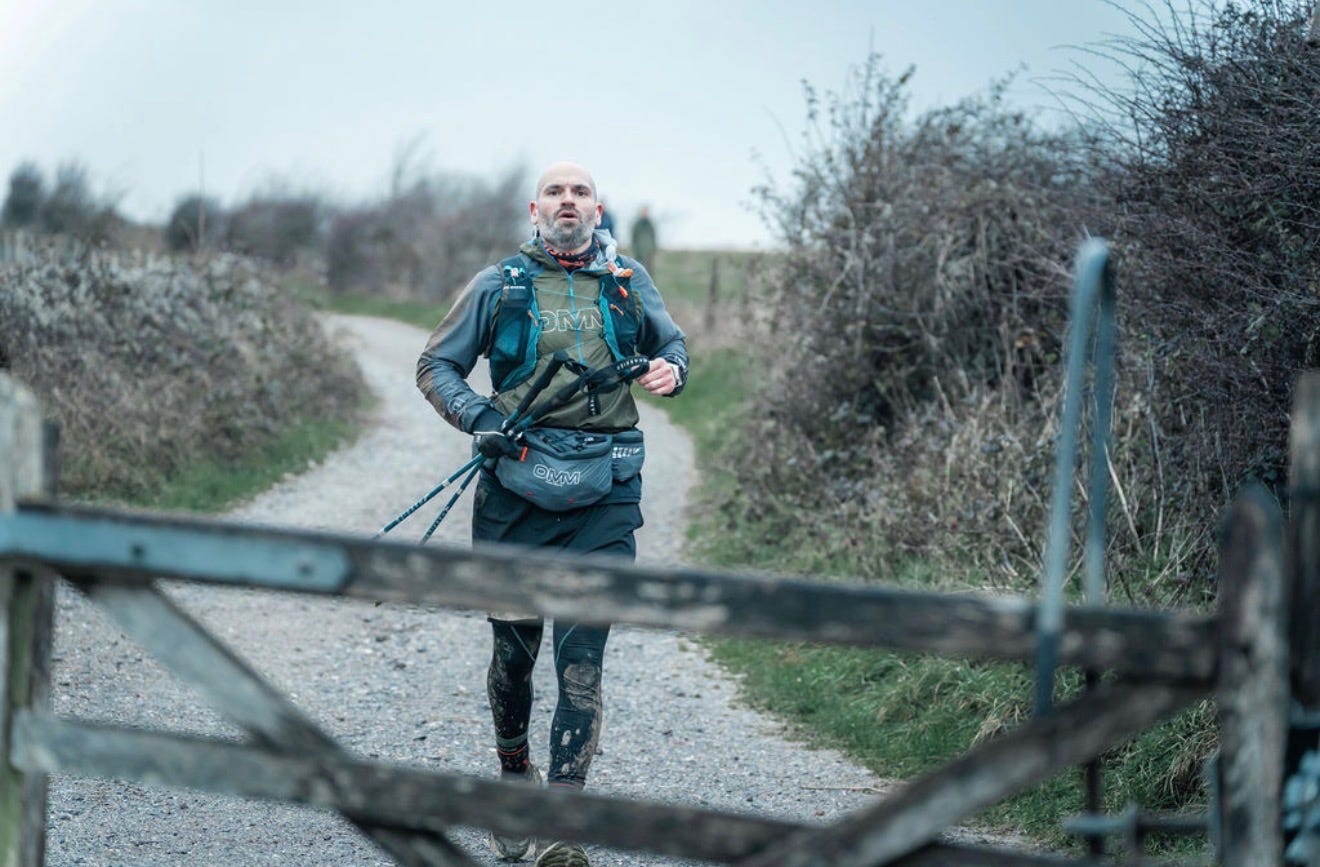
I ran a 55-mile ultramarathon last weekend. Brutal winter conditions. A ridiculous amount of elevation. Trained for months. Not casually. The kind of training where you give everything you’ve got. Where your body aches constantly. Where you’re always thinking about the next meal, workout or when you can get to bed to recover.
Three weeks before the race, I injured my ankle as i explained in The Obstacle Doesn’t Care About Your Timeline. Not catastrophically, but enough to stop me training and make me question whether I should even show up.
I showed up anyway.
The race begins. No ankle pain. I felt great. Excited. Pumped. Focused.
Mile 5. I’m moving well. The pace feels good. I’m in the zone.
And then I slip on the muddy descent. I go down hard onto the end of my trekking pole.
The impact is immediate. Sharp. Excruciating. Real.
And my mind immediately starts the story.
“You’ve broken your ribs. You’ve punctured your lung. You need to go to the hospital. You can’t possibly keep going. This is over. You trained for months and now it’s done. You’ve failed, again.”
That voice was so convincing. So logical. So certain. It sounded like it was protecting me.
But I realised something: that voice wasn’t protecting me from pain. It was protecting me from the excuses i’d make if I kept going and failed to finish.
The pain in my ribs was real. I’d broken them three times in the past. I was pretty certain they were broken. That was information. That was my body saying something happened.
But the story about what it meant? That was optional.
That was the first arrow. The crash. The impact. The pain.
I shut the voice down. I kept moving.
The second arrow would have been the story: “You’re fragile. You can’t handle these races anymore. You should quit.”
I chose not to shoot myself with it.
Pain is a signal. Suffering is a choice.
Here’s what the science actually shows: when you experience pain, your brain registers it and sends a signal through your central nervous system. That’s the biological function. That’s survival. That’s your body doing its job.
But then something else happens. Your brain converts that signal into a psychological interpretation. It tells you what the pain means. It tells you what you should do about it. It tells you who you are because of it.
That interpretation is where suffering lives.
Meditation teacher Shenzhen Yang puts it simply: Pain multiplied by Resistance equals Suffering.
Resistance is the misguided belief that the pain shouldn’t be there. It’s the voice saying “this isn’t fair” or “this shouldn’t be happening” or “I can’t handle this.”
But resistance doesn’t make the pain go away. Resistance makes the pain worse because now you’re fighting two battles instead of one. You’re fighting the actual problem and you’re fighting your mind’s refusal to accept it.
The pain is finite. The suffering is infinite because you keep feeding it.
Here’s what most people miss
You think this only applies to big moments. Grand failures. Career setbacks. Relationship breakdowns.
It doesn’t.
You’re shooting yourself with second arrows constantly. Every day. Dozens of times.
Your kid spills their drink. First arrow: mess on the floor. Second arrow: “They never pay attention. I’ve told them a hundred times. Why can’t they just be careful?”
Your boss sends a blunt email. First arrow: short message. Second arrow: “They’re unhappy with my work. They’re probably going to fire me. I’m not valued here. I need a new job”
You wake up tired. First arrow: low energy. Second arrow: “I’m always tired. I can never get enough sleep. Something must be wrong with me.”
Every second arrow costs you. Energy. Focus. Peace. Relationships.
The problem isn’t that you don’t know how to separate facts from stories. The problem is you’ve never realised how often you’re failing to do it.
Facts and feedback
The separation is simple but not easy.
When something goes wrong, identify what actually happened. Not what it means. Not what it says about you. Just what happened.
I fell. That’s the fact.
Missed a deadline? That’s the fact.
Got rejected? That’s the fact.
Then ask yourself: what does this fact actually tell me? Not what does it mean about my worth or capability. What does it tell me about the situation?
I fell because I wasn’t paying attention to my footing. That’s useful feedback.
You missed a deadline because you underestimated the work. That’s useful feedback.
You got rejected because your approach didn’t resonate with that person. That’s useful feedback.
Once you have the feedback, you can act on it. You can adjust your footing. You can improve your estimation. You can refine your approach.
The suffering comes when you skip this step and go straight to the story. When you decide the fall means you’re fragile. When you decide the missed deadline means you’re incompetent. When you decide the rejection means you’re not good enough.
Those stories aren’t facts. They’re interpretations. And interpretations can be changed.
But what if the story is true?
This is the objection that stops most people.
“What if I really am incompetent? What if I really am not good enough? What if the story is actually true?”
Here’s the thing. Even if the story is true, it’s not useful.
Even if you are incompetent at something, that doesn’t tell you what to do about it. It just tells you that you’re incompetent at that thing.
And if you’re incompetent at something, the solution isn’t to spiral about your incompetence. The solution is to get better at it.
The story doesn’t help you. It just paralyses you.
Realism isn’t the same as the story your mind is telling you. Realism is: “I missed this deadline. I need to adjust my systems.” The story is: “I’m a failure and I’ll always be a failure.”
One is useful. One will stop you dead.
You’ll probably fail again. And when you do, you’ll have the same choice. You can believe the story your mind tells you about what the failure means. Or you can separate the fact from the narrative and decide what it means to you.
The people who succeed aren’t the ones who never fail. They’re the ones who fail and refuse to believe the story their mind tells them about what the failure means.

Proof point: Mile 55
50 miles after my fall. I finished the race.
15 hours and 27 minutes. Less than 3 minutes away from missing the cut off and being declared a DNF (Did Not Finish).
55 miles. All the reasons to quit.
But I didn’t quit because I separated the facts from the stories.
The first arrow was: I was in pain. The second arrow would have been: I should quit.
The first arrow was: I was tired. The second arrow would have been: I can’t keep going.
The first arrow was: I had doubts. The second arrow would have been: I’m not capable.
I chose not to shoot myself with any of them.
I acted based on the facts. I kept moving. I adjusted my pace. I managed my relationship with the pain.
And I crossed the finish line.
Not because I’m special. Not because I have some superhuman pain tolerance. But because I refused to believe the stories my mind was telling me about what the facts meant.
The pain didn’t disappear. But my relationship to it changed completely.
Managing the narrative changes everything
Three months ago in my last race, my mind quit before my body did. I wrote about it in My Mental Breakdown at Mile 75. Spent hours obsessing over yard positions, drowning in imposter syndrome, comparing my splits to elite runners. The physical capability was there. The mental framework collapsed.
This race was different.
I came last in my age category. Dead last. Not close to last. Actually last.
But when I crossed that finish line, I felt like I’d won.
No comparison to other runners. No self-doubt about whether I belonged. No mental collapse about not being good enough. Just pure determination to finish what I started.
The first arrow was different this time. Instead of mental pain, this was physical.
But this time, i refused to get hit by the second arrow.
Refused to make it mean I wasn’t capable. Refused to turn placement into identity. Refused to let the story override the mission.
My last race taught me what happens when you lose control of the narrative. This one proved what becomes possible when you manage it.
Same person. Same physical capability. Different mental framework. Completely different race.
This is what pulling from previous experiences looks like. The breakdown at Mile 75 wasn’t failure. It was curriculum. Data about what needed work. Information I used this time to stay focused on my race instead of everyone else’s.
What’s your story?
Right now, you’re facing something that hurts.
Maybe it’s a goal that feels impossible. Maybe it’s a failure you’re replaying. Maybe it’s a rejection you can’t shake. Maybe it’s a mistake you keep telling yourself defines you.
And your mind is offering you a second arrow. A story about what the first arrow means.
The question isn’t whether you can handle the pain. You already know you can. You’re still here, aren’t you?
The question is: will you keep shooting yourself with the second arrow?
Or will you separate the fact from the narrative and decide what it means to you?
Because that’s where your actual power lives. Not in avoiding pain. But in refusing to let the story about the pain become your reality.
The pain will still be there. But your perception of it will change. And that’s the only thing that ever needed to change.
Thanks for reading.
To your growth.
- Chris
P.S. What’s the second arrow you keep shooting yourself with? Reply and tell me. Sometimes naming it is the first step to stopping it.

I have broken my leg recently and went through the surgery. I was lying on the bed waiting for the pain to come again, but here i didn t need any more of it. That pain, that information, was not of any use to me anymore.
I knew what had happened and i knew what is coming. Here i understood that i just need to accept it, breath into it and eventually it went away.
Nice connection between accepting an actual pain and building stories in our heads to either justify it or reject it.
And also, big congrats to your race and thanks for sharing this story!
Cheers